

One morning you wake up glowing. You love your body, your voice, your womanhood, and you feel completely at home in yourself. Then, sometimes by the next day, something flips, and suddenly you are furious: at yourself, at being trans, at the transition, at the hormones, at the people who just won’t see you. If that whiplash sounds painfully familiar, I want you to know you are not broken, and you are certainly not alone. I see you, sweet sister.
Trans women often swing between self-love and self-hatred because of decades of accumulated shame and guilt, plus constant hostility from the world, even from some cis and trans women. It’s common, and you can learn tools to steady yourself.
But understanding why it happens is only half of it. There are two very different sources of this anger, one you can heal from the inside and one you can learn to shield yourself from, and once you can tell them apart, everything starts to feel a whole lot lighter. Let’s break it down together.
The Love-Hate Swing Is Real
Think of a bride. Before the wedding she is all sweetness and sparkle, and then, suddenly, the rage gets unleashed. (My younger sister did exactly that, and I hope she’s not reading this!) The swing many trans women feel is just as sudden. One moment you love everything about yourself as a woman. The next, you hate being trans, hate saying the word, and hate that you had to go through any of this just to feel like you belong in the world.
Maybe you’re angry about taking hormones. Maybe you’re angry at the people around you for not accepting you. Whatever the trigger, you can go from feeling amazing to feeling like Godzilla almost overnight.
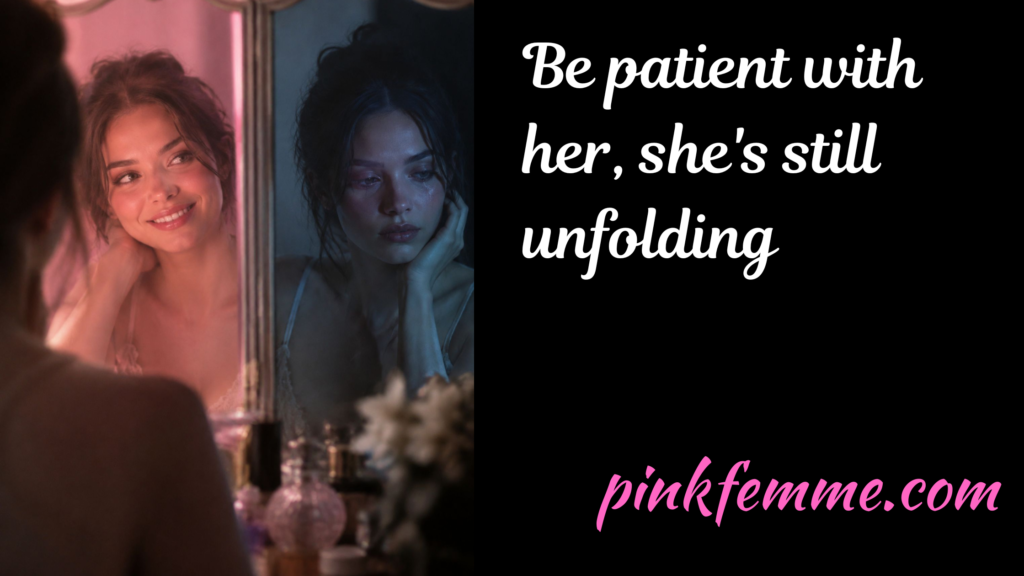
What makes the swing so disorienting is how ordinary the moments can be that set it off. You might spend the morning adoring the woman in the mirror, then catch a glimpse of yourself in a store window at a bad angle and feel your whole mood collapse. A photo you loved yesterday suddenly looks wrong today. Your voice feels beautiful on Tuesday and unbearable on Wednesday. Sometimes there isn’t any trigger at all. You simply wake up on the other side of the feeling, and you can’t trace how you got there.
It can also feel physical. When the love is flowing, you may notice you stand taller, smile more easily, and take more care with yourself because you want to. When the anger arrives, your chest tightens, you feel short-tempered with everyone, and you may want to hide under a blanket or snap at the people closest to you. Many women tell me it feels as though two different people are living inside them, one who is proud and radiant, and another who is exhausted, irritable, and wishing the whole thing were easier.
Then comes the part nobody talks about: the aftermath. Once the storm passes, many of you feel embarrassed by what you said or how you acted. You may worry you scared or hurt someone you love, or you may replay the angry moment and wonder, Does this mean I’ve been fooling myself? That second-guessing can sting more than the anger itself, and it is why this swing is so tiring. You’re not only living through the highs and lows, you’re also judging yourself for having them.
So please hear this, sweet sister: having both feelings does not make you fickle, dramatic, or confused about who you are. Big, life-changing journeys stir up big feelings, and love and anger can live side by side in the same heart. One hard day doesn’t erase the beautiful ones, and one beautiful day doesn’t mean you have to pretend the hard ones aren’t real. Both belong to you, and both are allowed.
When the Swing Hits Hardest
It can happen at any point in transition, but it tends to be strongest in two places. The first is the middle, that frustrating in-between stretch when the world no longer quite sees you as a man, but doesn’t yet see you fully as a woman. The second is toward the end of transition, or even after it.
Let’s start with the middle, because it asks so much of you. Your body is changing, but not on your timeline. Hormones work slowly, and waiting for the softer skin, the new shape, or the voice that finally feels like yours can test your patience. In the meantime, you may be called “she” at the grocery store and “sir” at the pharmacy within the same hour. Every interaction becomes a small gamble, and you find yourself bracing before you walk into a room. Even choosing an outfit can feel loaded, because you wonder how it will be read. It’s exhausting to feel this visible and this uncertain at the same time, and when you’re that tired, your emotions have very little cushion. A single misgendering can undo a whole week of confidence.
The later stage surprises many women, because nobody warns you about it. You may expect that once you’ve reached certain milestones, like living full-time as yourself, finishing medical steps, or updating your name and documents, the heavy feelings will simply lift. Sometimes they don’t, at least not right away. Often it’s the opposite. Now that you are finally safe and settled enough to feel everything, the feelings arrive. You may grieve the years you spent hiding, or the relationships that changed along the way. You may compare yourself to other women and wonder why you don’t feel more joyful when you “should.” Meanwhile, the people around you may have moved on and stopped asking how you’re doing, so you can feel strangely alone just when you thought the hard part was over.
All of this can leave your dysphoria and anxiety louder than before, and it’s the perfect breeding ground for self-doubt. Am I making the right choice? Did I make the right decisions? Should I have started hormones? If I swing between loving and hating myself, am I really a woman? Of course those questions come up. When your inner world keeps flipping, doubt is a natural result.
But I want to gently offer you a different way to look at it. Doubt that shows up during an emotional low is not proof that you made a mistake. It’s usually a sign that you are tired, overwhelmed, or in need of support. Try not to make big decisions about who you are on the days when you feel the worst, and notice what your heart says on the calmer days too. Many of the women I work with find that when the storm passes, the knowing is still there, steady and quiet, waiting for them. You don’t have to have every answer today. You only have to be gentle with yourself while you move through this.
Decades of Shame and Guilt Come Up to Be Healed
Many of you have lived with gender dysphoria since you were four, five, or six. Some of you are in your 40s, 50s, 60s, even 70s. That is decades of carrying your authentic feminine self in secrecy, covered up by the gender you were assigned. When you are that afraid to share her, even with the people you love, shame starts to build. You feel embarrassed. You feel guilty for wanting to come out and live as a woman.
Think about what those years actually asked of you. Many of you became experts at hiding. You learned to monitor your gestures, your voice, your clothes, and even what you let yourself enjoy, always checking whether you were giving her away. Some of you threw yourselves into work, hobbies, or roles that looked as masculine as possible, hoping that if you proved it loudly enough, the feelings would fade. Some of you buried her so deeply that you only let her out in private, late at night, and then felt a rush of relief followed by a wave of shame once the door was closed again. That cycle of relief and embarrassment, repeated for years, teaches your heart a painful lesson: that she is something to be hidden.

Over time, that lesson becomes a voice inside your head. It says, What is wrong with me? Why can’t I just be normal? It’s the voice that tells you that you’re selfish, that you’re too much, that you’re too late. Because it has been there for so long, it often sounds like the truth instead of what it really is, which is the echo of years spent protecting yourself. Many women I talk with are shocked to realize how harshly they speak to themselves, in ways they would never dream of speaking to a friend.
There is grief tucked in here too. When you finally let yourself look back, you may mourn the little girl who never got to play the way she wanted, the teenage years you spent feeling out of place, or the decades you can’t get back. Grief that isn’t acknowledged often turns into anger or guilt, which is one more reason these feelings come up so strongly once you start living openly.
That guilt gets heavier if you are in a marriage or a family, because it can feel as though acknowledging her means choosing yourself over the people you love. You may find yourself bargaining: If I wait until the kids are grown, if I wait until my parents pass, if I wait until the timing is better. You may fear that your honesty will cost someone else their sense of security, and so you carry their feelings on top of your own. Years of carrying shame and guilt will bubble up as self-loathing. It’s not because you’re a bad person. It’s because you’ve been holding more than any one heart was meant to hold.
For many of you, something eventually snapped, like a rubber band stretched as far as it could go. Maybe it was a breaking point, a moment when you couldn’t go another day pretending. Maybe it was quieter, a deep realization that arrived in the middle of an ordinary afternoon and simply wouldn’t leave. Either way, you decided to take control of your life. That decision is an act of courage, and I hope you give yourself credit for it, even on the days when it feels messy.
And please remember: transition is a blueprint unique to each person. Whether you choose surgeries or not, it is all valid. Decide what works for you, and never put yourself in a box.
The Joy of Finally Coming Up for Air
When you started taking steps, a lot of you felt amazing, and that is the “love” side of the swing. I’m not a strong swimmer myself, but I know that feeling of coming up from underwater, gasping, and finally being able to breathe. That is what it feels like to present as your true self, come out to someone, or embody the feminine in you. It’s freeing.
Often it’s the smallest moments that carry the most joy. Hearing your chosen name spoken out loud for the first time. Picking out a lipstick shade just because you love it. Laughing with a friend who calls you “girl” without a second thought. Catching your reflection and, instead of looking away, smiling back. These moments might look tiny from the outside, but for many of you they are enormous, because you are finally experiencing things you never allowed yourself to want.
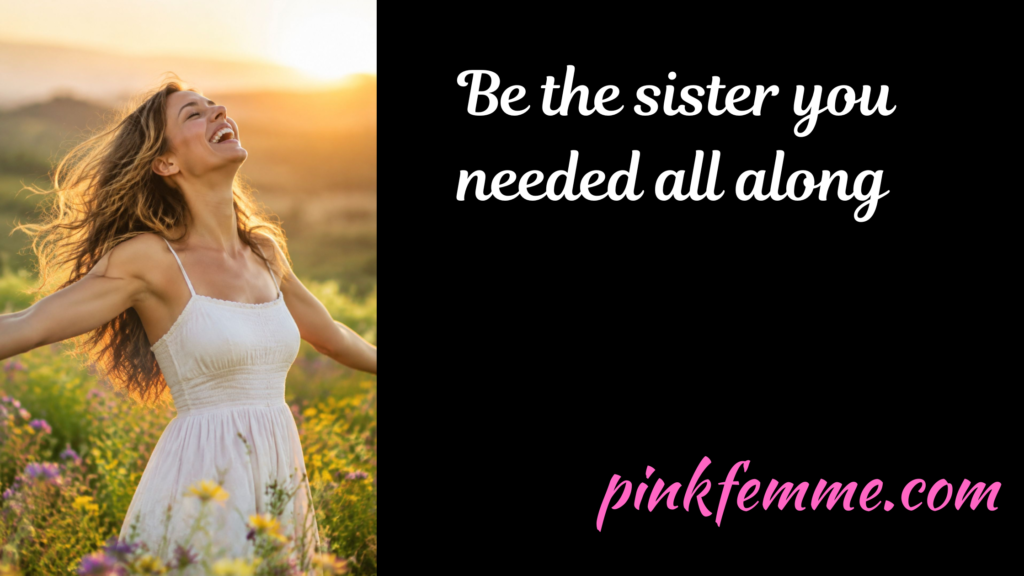
You may also notice the joy in your body. Your shoulders drop. Your breathing slows. You find yourself humming while you get ready in the morning or lingering in front of the mirror, simply enjoying her. Some of you describe feeling lighter, as if you’ve set down a heavy bag you didn’t realize you were carrying. Others feel playful and curious, like a girl discovering her own style for the first time, no matter how old you are. There is no wrong age to enjoy being new to yourself.
It’s also deeply moving to feel truly seen. When someone looks at you and reflects back the woman you know yourself to be, something in you softens and relaxes. That feeling of being witnessed is one of the sweetest parts of this journey, and it deserves to be celebrated, not rushed past.
But the same stirring-up that lets you breathe can also bring anger, shame, guilt, and self-loathing right to the surface, and the back-and-forth can feel like you’re gaslighting yourself. One day you are certain of your joy, and the next you are doubting whether any of it was real. You may catch yourself thinking, How could I feel so happy yesterday and so miserable today? Was I pretending then, or am I pretending now? That confusion is painful, and I want you to know it makes complete sense.
Here is a gentle way to understand it. What you’re feeling is years of emotions you never had the space to process, because you were still keeping a big part of yourself caged. It’s hard to sort through your feelings thoroughly when you’re busy holding part of yourself behind a locked door. Now that the door is opening, everything that was stored away is finally free to move, and it doesn’t always move in a neat or comfortable order. Think of opening a closet you’ve kept shut for decades. Things tumble out. Some are lovely, and some are dusty and heavy, but you couldn’t clean the closet until you opened it.
When you step into who you are, you start detoxing all of that. And just like any detox, it can feel worse before it feels better. You might feel tired, tearful, or raw. You might need more rest, more quiet, or more tenderness than usual. That doesn’t mean something is going wrong. It means the cleansing is underway.
The hard feelings are simply pointing to spots that still need care. Try thinking of each wave of anger or sadness as a little messenger rather than a verdict. Instead of asking, What’s wrong with me?, you can ask, What are you trying to show me, sweetheart? Sometimes the answer is an old hurt that wants to be acknowledged. Sometimes it’s simply that you need to cry, journal, talk to a trusted friend, or take a long, warm bath. Whatever it is, meeting those feelings with softness instead of judgment helps them move through you more quickly, and leaves more room for the joy to stay.
Why the World Feels Like Rain on Your Best Day
The biggest reason for the swing is that, as you love yourself and own your life, you are bombarded by a world that tells you, especially here in the United States right now, that you shouldn’t exist. You hear that you’re mentally ill, a pervert, a deviant, and even that trans women are predators. It makes no sense, and yet it keeps coming.
What makes it so heavy is that it rarely arrives as one big blow. It comes as a steady drip. A headline here, a cruel comment there, a “debate” on television about whether your life is real, a relative’s offhand remark at dinner. Each drop on its own might seem small, but together they soak you through. Many of you tell me that you’ve started scanning every room and every screen for danger, even on your happiest days. That kind of constant alertness is exhausting, and it leaves less energy for joy.
It can also be frightening. When strangers argue about your rights and your worth as if you were an issue instead of a person, it’s natural to worry about your safety, your job, your healthcare, and your future. Carrying that background worry day after day would put anyone on edge. So if you find yourself snapping, crying, or feeling suddenly hopeless after an innocent scroll through your phone, there’s nothing wrong with you. You’re responding like a human being who is being hurt.
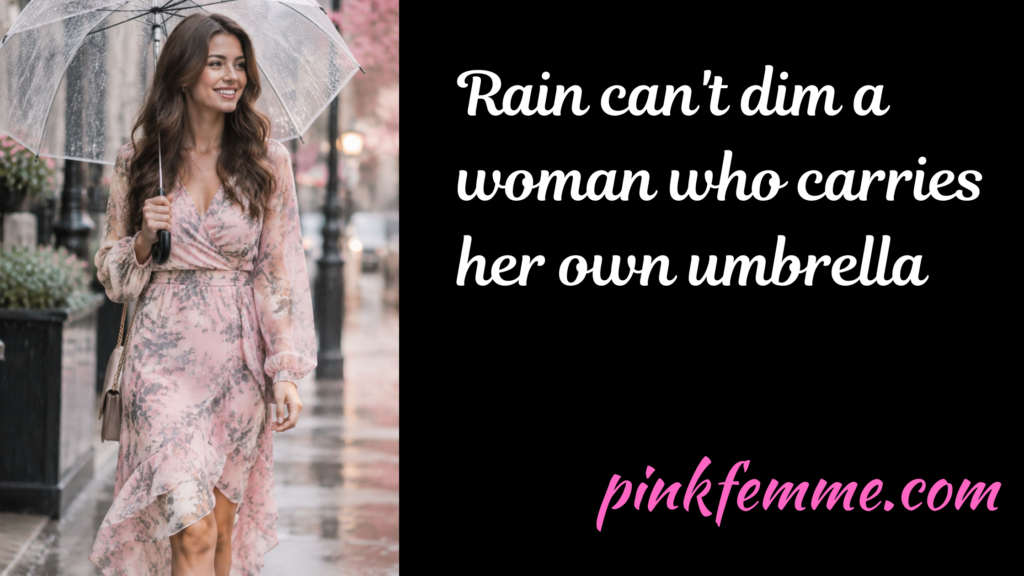
Picture waking up feeling beautiful and empowered, with sunshine all around you. You’ve done your hair, picked the outfit that makes you feel radiant, and you’re humming along. Then you step outside, or turn on the news, or open social media, and a dark gray cloud rolls in. Your shoulders tighten. Your smile fades. The glow you built so carefully dims, and it can feel like someone just flipped a switch.
Many of you haven’t yet learned to carry an umbrella, and honestly, why would you have? No one hands us one. Think of the umbrella as your toolkit: self-care, a strong mindset, maybe a protection candle or a little sage, whatever helps you stay protected so you can observe the rain without getting soaked. Your umbrella might be small and simple, such as:
Choosing which accounts and news sources you let into your day, and muting the ones that leave you shaken.
Setting a limit on how long you scroll, especially first thing in the morning and right before bed.
Keeping a few people on speed dial who adore you exactly as you are.
Having a grounding ritual you can reach for, like slow breathing, a favorite song, a cup of tea, or stepping outside for a walk.
Keeping a note on your phone of the kind things people have said to you, so you can read it when the clouds roll in.
None of these will stop the rain, but they can keep you dry enough to carry on feeling like yourself.
I don’t know anyone who loves being caught in the rain when they look glorious. I certainly don’t enjoy my makeup running and my hair going flat. That is why this anger is so understandable: the world is telling you, don’t you dare be happy, don’t you dare embody your womanhood. Standing up to that takes tremendous resilience, ownership, and inner power.
And the world isn’t only telling you how to be a trans woman, it is also telling you how to be a woman in general. You’re expected to be thin but not too thin, polished but effortless, confident but never intimidating, youthful forever, and endlessly agreeable. Every woman feels that pressure, but when you’re trans, the stakes can feel higher, as though you must be a flawless example of womanhood just to earn your place. Please hear me: you don’t owe anyone a perfect performance. You are allowed to be a woman who has off days, strong opinions, messy hair, and her own way of doing things, just like the rest of us.
When Even Sisterhood Feels Like Gatekeeping
It gets harder. Many wonderful cis women are incredibly supportive, but some feel that your existence somehow robs them of a birthright, as if only they can have womanhood. (I honestly don’t know why being born a particular gender would be anyone’s birthright.)
When that message comes from another woman, it can cut in a particular way. You may have grown up admiring women, learning from them, and dreaming of standing beside them. So being told, with a cold look or a pointed comment, that you don’t belong in the women’s restroom, the group chat, or the circle of friends can feel like a door slamming in your face. It isn’t only unkind. It touches the longing many of you have carried for years: to simply be one of the girls.
Then you go looking for your trans sisterhood, because we women are wired for community, storytelling, and connection. I love working with trans women for exactly this reason; it feels like a healing circle of feminine energy. I grew up with sisters, and I want every one of you to know that kind of closeness, the late-night talks, the shared laughter, the knowing glance across a crowded room that says, “I’ve got you.”
And yet some of you are met with gatekeeping: Are you on hormones? Still have a penis? Facial hair? You look too sexualized for this group. Suddenly you’re being quizzed instead of welcomed, measured against a checklist nobody agreed to. Some of you are told you aren’t trans enough, or aren’t woman enough, or are too feminine, or not feminine enough. There is no way to win, because the rules keep changing depending on who is holding the clipboard.
Think about what that does to someone who was already hurting. You arrive tender, hoping to exhale, and instead you find yourself editing what you say, softening your style, or shrinking your story so you don’t get picked apart. Some women leave these spaces and don’t go looking again, and then the loneliness settles in deeper than before. It’s one thing to be shut out by a world that doesn’t understand you. It’s another to be shut out by the people you expected to understand you best. That is a loss many of you grieve quietly, and it’s a very real part of why the highs and lows feel so extreme.
So is it any wonder you love yourself one day and are angry the next?
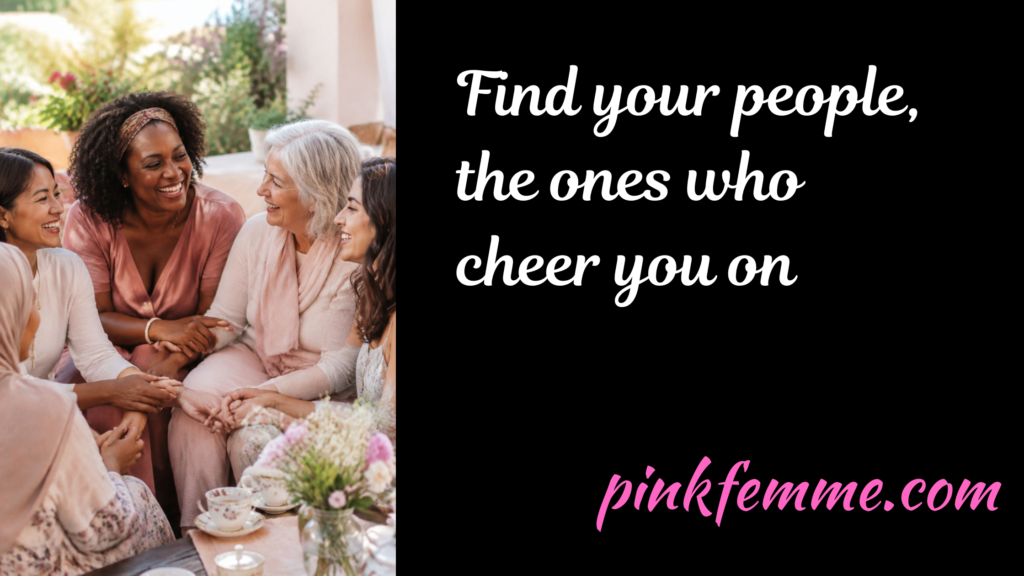
Honestly, my goodness, how are you still standing? You are standing because you are resilient. If you have lived with gender dysphoria and it did not take your life, you have shown more endurance than most people will ever need. Childbirth, even without an epidural, lasts hours. Dysphoria can last decades. Add rejection from both sides on top of that, and your strength is nothing short of remarkable. I hope you let yourself feel proud of that, because I am proud of you.
Two Kinds of Hate, and What You Can Control
The hatred you feel is dual. The first part is your own internalized shame, guilt, and self-loathing. That is not a flaw; it is a signal that something is ready to be worked through, and you will be a stronger, more amazing woman once you do. It comes down to full self-acceptance, and you can detox it.
How do you tell which kind you’re feeling? Next time the anger or self-disgust shows up, try pausing and asking yourself two gentle questions: Did something happen just now, or did this come out of nowhere? and Whose voice is this? If the feeling arrived after a cruel comment, a headline, or a snub, it likely belongs to the outside world. If it arrived in a quiet moment, with thoughts like “I’m not good enough” or “I’ll never be a real woman,” it’s probably an old inner voice asking for your attention. Sometimes it’s a blend of both, and that’s okay. Simply naming which one you’re dealing with can take away a surprising amount of its power, because you stop treating every painful feeling as a verdict about who you are.
Working on the first kind is tender, personal work, and you don’t have to do it alone. Many women find it helpful to see a therapist who truly understands gender, or to join a support group where they can say the unsayable out loud and be met with a nod instead of a flinch. Writing can help too. Try a letter to your younger self, the little girl who had to hide, telling her what you wish she had heard. Try speaking to yourself the way you would speak to a dear friend on her hardest day. It may feel awkward at first, like wearing shoes you haven’t broken in, but kindness is a skill, and it gets easier with practice. Be patient with the pace. Shame took years to build, and it will take time to loosen. That’s not failure; that’s healing.
The second part comes from the world, cis women, trans women, and anyone else who pushes against you. You can’t control that. But you can control how you respond. You can set your boundaries when someone in a trans space tells you that you don’t belong, and recognize that they are projecting their own work onto you. Ask yourself whether you truly want to belong to a group with such a small, tiny view of womanhood, because trans womanhood is very broad. You can also learn to carry your umbrella, so that when the world pushes back you have tools to open and protect yourself.
It also helps to remember that you get to choose your people. You’re allowed to walk away from a group, a comment thread, or a relationship that leaves you feeling smaller every time. Walking away isn’t weakness, and it isn’t giving up on sisterhood. It’s making room for the kind that nourishes you. If you can’t find that circle right now, start with one or two women, whether cis or trans, who make you feel safe and celebrated, and let that be enough for the moment. A small circle of true friends is worth more than a crowded room of critics. And when a cruel remark does land, you don’t have to answer it. A calm exit, a deep breath, or simply deciding “that’s not mine to carry” can be a powerful response.
This isn’t me against the world. There are so many people who support trans folks, including plenty of cis women who see you as part of the sisterhood. I’m one of them. Trans women are women, and to me you are all my sisters. Many trans women support you too, so please don’t slip into doom and gloom; the glass is half full.
When you’re hurting, the cruelest voices are the loudest, and they can drown out the kind ones. But the kind ones are there. The coworker who quietly uses your name correctly, the neighbor who waves, the friend who texts “thinking of you,” the stranger who compliments your earrings: these moments count, and they deserve to be noticed. Try gathering them the way you’d gather flowers, so that on the heavy days you have something lovely to look at.
I also get pushback myself, including that I don’t belong in this space because I’m not a woman of trans experience. That is complete nonsense. You don’t need your oncologist to have had cancer to help you. Barriers like that come from other people’s powerlessness and insecurity, and they have nothing to do with you or me. When someone builds a wall like that, it says far more about their fear than about your worth. So you can let their words roll off, hold your head high, and keep walking toward the people and the life that welcome you.
Final Thoughts
The swing between loving yourself and hating yourself is one of the most common experiences of transition, and it does not mean you made the wrong choice or that you aren’t a woman. Part of it is old shame and guilt asking to be healed. Part of it is a world that keeps raining on you. You can work through the first, and you can learn to protect yourself from the second.
If all of this feels like a lot to take in, please don’t try to fix everything at once. Healing doesn’t happen in one big leap. It happens in small, quiet choices repeated over time. So if you’re wondering where to begin, here are a few gentle first steps:
Notice the swing without judging it. The next time your mood flips, simply say to yourself, “Ah, there it is again,” and breathe. Being curious instead of critical is already a step toward healing.
Choose one umbrella to practice this week. It doesn’t have to be fancy. A walk, a favorite song, a call to a friend, or a few minutes of journaling is plenty.
Reach out to one safe person. Telling someone, “I’m having a hard day,” can loosen the grip of a heavy feeling more than you might expect.
Celebrate one thing you love about yourself each day, even if it’s tiny. A smile you liked, a moment of courage, a compliment you let yourself believe.
And on the days when you slip, because everyone does, treat yourself the way you’d treat a beloved sister. Setbacks don’t undo your progress. They’re simply part of how a woman learns to hold herself.
The sooner you recognize that the barriers and cruelty come from other people’s wounds, the sooner you can shift from self-hate back to self-love and ownership of your trans womanhood. There is so much here for you. There is joy in the mirror, laughter with friends who truly see you, and a quiet confidence that grows stronger each time you choose yourself. That woman you glimpse on your brightest days is not a fantasy or a passing mood. She is you, and she is here to stay.
You have already shown tremendous courage just by being on this path, and you don’t have to walk it perfectly. You only have to keep walking, one gentle step at a time, with kindness for yourself along the way.
I’d love to hear from you. What happens when you go from self-love to self-hate? Have you learned to carry your own umbrella, and what does yours look like? Share your struggles and how you got through them in the comments, because we all benefit from each other’s stories. This is sisterhood, and you are always welcome here.
References
American Psychological Association. (2015). Guidelines for psychological practice with transgender and gender nonconforming people. American Psychologist, 70(9), 832-864.
Austin, A., & Craig, S. L. (2015). Transgender affirmative cognitive behavioral therapy: Clinical considerations and applications. Professional Psychology: Research and Practice, 46(1), 21-29.
Bockting, W. O., Miner, M. H., Swinburne Romine, R. E., Hamilton, A., & Coleman, E. (2013). Stigma, mental health, and resilience in an online sample of the US transgender population. American Journal of Public Health, 103(5), 943-951.
Coleman, E., Radix, A. E., Bouman, W. P., Brown, G. R., de Vries, A. L. C., Deutsch, M. B., et al. (2022). Standards of care for the health of transgender and gender diverse people, version 8. International Journal of Transgender Health, 23(Suppl. 1), S1-S259.
Hendricks, M. L., & Testa, R. J. (2012). A conceptual framework for clinical work with transgender and gender nonconforming clients: An adaptation of the minority stress model. Professional Psychology: Research and Practice, 43(5), 460-467.
Hughto, J. M. W., Reisner, S. L., & Pachankis, J. E. (2015). Transgender stigma and health: A critical review of stigma determinants, mechanisms, and interventions. Social Science & Medicine, 147, 222-231.
Meyer, I. H. (2003). Prejudice, social stress, and mental health in lesbian, gay, and bisexual populations: Conceptual issues and research evidence. Psychological Bulletin, 129(5), 674-697.
Neff, K. D. (2003). Self-compassion: An alternative conceptualization of a healthy attitude toward oneself. Self and Identity, 2(2), 85-101.
Tangney, J. P., & Dearing, R. L. (2002). Shame and guilt. Guilford Press.
Testa, R. J., Habarth, J., Peta, J., Balsam, K., & Bockting, W. (2015). Development of the Gender Minority Stress and Resilience Measure. Psychology of Sexual Orientation and Gender Diversity, 2(1), 65-77.
If you are looking for more lifestyle-related posts here on Pink Femme, you can find them all here.
If you enjoy reading transgender coming out stories or romance stories with a trans-positive element, take a look at my author page on Amazon where you will find all the novels that I have published so far.
Keep up to date with all my latest femme news with the fabulous Pink Femme Newsletter. Each Monday you’ll receive an email from me that will include a chapter from the novel that I am currently writing. I will also alert you to interesting information from articles that have not yet been published on Pink Femme. The Pink Femme Newsletter is the only place to see chapters from the novels before they are published. Sign up today: PINK FEMME NEWSLETTER.
Thank you for your visit to the Pink Femme website. I’m determined to keep all of the valuable information on here free for anyone to access. No pay-walls. That said, if you are able to help keep the lights on, so to speak, I would really appreciate your support. Here is the Pink Femme Patreon page with a really cheap support tier. Every little bit helps to cover the costs of keeping Pink Femme alive on the internet. Hugs to all of you.
When it comes to my choices for makeup and beauty products, I only use L’Oréal Paris (Available on Amazon). I have really sensitive skin and never once have I had any negative reaction to any L’Oréal product.
Recent Posts
High-Waisted Panties: The Secret to a Smooth and Feminine Silhouette
I remember sitting on the edge of my bed with a close friend, watching her turn a pair of underwear over and over in her hands, unsure but hopeful. That moment made me realize how much quiet courage...
I still remember the first time I noticed my skin didn’t bounce back the way it used to—it was after a late night, zero water, and way too much makeup remover scrubbing. I stared at my reflection...